john deere tractor value guide
John Deere Tractor Value Guide: An Overview
Navigating John Deere tractor values requires understanding market dynamics, model specifics, and condition assessments. Prices range widely, from $20,000 to $150,000+, influenced by numerous factors.
Understanding John Deere Tractor Pricing
Determining the value of a John Deere tractor is a multifaceted process, extending beyond simply checking a price list. New models command prices spanning from approximately $20,000 to exceeding $150,000, contingent upon horsepower, features, and technological advancements. However, the used tractor market presents a more nuanced landscape. Factors like age, operational hours, and overall condition significantly impact resale value.
Auction results, data from platforms like Machinery Pete and AuctionTime, and comparable sales listings provide valuable benchmarks. Understanding that long-term ownership costs – including maintenance and potential repairs – also influence a tractor’s true economic value is crucial for informed decision-making.
Factors Influencing John Deere Tractor Value
Several key elements dictate a John Deere’s worth: age, hours used, physical condition, geographical location, and current market demand all play critical roles.
Age and Model Year
Generally, newer John Deere tractors command higher prices due to advancements in technology, improved efficiency, and reduced wear and tear. However, classic or rare models, even older ones like a 1983 John Deere 4240 S, can retain significant value or even appreciate, particularly if well-maintained. Model year directly impacts features and capabilities; a 2017 John Deere 6R 6130 R will naturally be worth more than a comparable older model. Depreciation is most rapid in the initial years, slowing as the tractor ages. Collectors often seek specific years or limited-edition models, driving up demand and price. Assessing the tractor’s age alongside its overall condition is crucial for accurate valuation.
Hours of Operation

Tractor hours are a primary indicator of usage and remaining lifespan, significantly impacting value. Lower hour tractors generally fetch higher prices, suggesting less wear on critical components like the engine and transmission. However, simply low hours aren’t enough; maintenance records are vital to verify those hours were accompanied by proper care. High-hour tractors aren’t necessarily worthless, but require thorough inspection for potential repairs. A well-maintained tractor with 5,000+ hours might be more valuable than a neglected one with fewer. Potential buyers should carefully consider the cost of anticipated repairs versus the price reduction for higher hours.
Condition of the Tractor
A tractor’s condition is paramount in determining its market value, often outweighing hours alone. Excellent condition signifies minimal wear, original parts, and a well-maintained appearance, commanding premium prices. Good condition implies some wear but with no major mechanical issues, representing a solid, usable machine. Fair condition indicates noticeable wear, potentially requiring some repairs, and will significantly lower the price. Poor condition suggests substantial repairs are needed, drastically reducing value. Pre-purchase inspections are crucial to accurately assess the condition, identifying hidden problems that could impact long-term ownership costs.
Location and Demand
Geographical location significantly impacts John Deere tractor values, driven by regional agricultural needs and demand. Areas with intensive farming operations typically exhibit higher prices due to increased competition. Demand fluctuates seasonally, peaking before planting and harvest times. Auction results vary widely depending on the selling location and buyer pool. Transportation costs can also influence the final price, especially for buyers located far from the seller. Monitoring regional market trends through resources like Machinery Pete and AuctionTime is essential for accurate valuation, reflecting local supply and demand dynamics.

Popular John Deere Tractor Models & Estimated Values (2026)
Exploring key models like the 3045B, 5105, 6120, 6R 6130R, and 8420 reveals diverse price points, reflecting power, age, and overall condition assessments.
John Deere 3045B (Compact Utility Tractor)
The John Deere 3045B, a popular compact utility tractor, generally falls within a price range of $15,000 to $30,000 in 2026, depending heavily on its condition and hours of operation. This model, known for its versatility in landscaping and small farm tasks, typically features a 45 horsepower engine and a 12×12 transmission.
Lower prices are observed for units with higher hours or requiring mechanical attention, while well-maintained, low-hour models command a premium. Auction results and private sales data indicate that tractors in excellent condition, with minimal wear and tear, can easily reach the higher end of this estimated value range. Regular maintenance records significantly boost resale value.
John Deere 5105 (40 HP Tractor)
The John Deere 5105, a 40 horsepower tractor, is estimated to be valued between $25,000 and $45,000 in 2026. This 4×4 model, frequently utilized for general farm work, showcases a blend of power and efficiency. Newer, low-hour units with advanced features will naturally command higher prices within this bracket.
Factors like mileage, overall condition, and any included implements significantly influence the final sale price. A well-maintained 2022 model, for instance, will likely fetch a price closer to the upper end of the range. Prospective buyers should thoroughly inspect the tractor and review service records to ensure a fair valuation.
John Deere 6120 (Row Crop Tractor)
The John Deere 6120, a versatile row crop tractor, is currently estimated to be worth between $20,000 and $35,000 as of 2026. A used 2017 model can be found for around $2,421,711 RUB, demonstrating regional price variations. Its value hinges on factors like hours of operation, mechanical condition, and the presence of essential implements.
Tractors utilized for demanding row crop applications may exhibit more wear and tear, impacting their price. A meticulously maintained 6120 with a documented service history will command a premium. Thorough inspection, including engine and transmission checks, is crucial for accurate valuation and a sound investment.
John Deere 6R 6130R (Modern Row Crop Tractor)
As a modern row crop tractor, the John Deere 6R 6130R typically commands a higher price point. A used 2017 model is currently valued around $4,865,271 RUB, reflecting its advanced features and newer technology. Expect to invest between $80,000 and $140,000 depending on condition and specifications in 2026.
Factors influencing value include autotrac guidance systems, loader attachments, and overall hours. Lower-hour tractors with well-maintained interiors and documented service records will fetch top dollar. Prospective buyers should prioritize a comprehensive inspection, focusing on engine performance and transmission functionality, to ensure a worthwhile purchase.
John Deere 8420 (Large Frame 4WD Tractor)
The John Deere 8420, a large frame 4WD tractor, represents a significant investment. A used 2005 model with Dutch registration is currently listed for approximately €59,800. In 2026, expect values to range from $60,000 to $120,000, contingent on condition, hours, and location.
These tractors are highly sought after for heavy-duty tasks, so functionality is key. Inspect the 4WD system thoroughly, check for signs of frame stress, and verify engine health. Well-maintained 8420s with documented service histories will command premium prices, appealing to farmers and large-scale agricultural operations.
Where to Find John Deere Tractor Values
Reliable resources like Machinery Pete, AuctionTime, and TractorHouse provide extensive listings and price data. These platforms offer valuable insights for accurate valuations.
Machinery Pete
Machinery Pete is a widely recognized and respected source for agricultural equipment values, including John Deere tractors. The platform offers comprehensive auction results, detailed equipment listings, and insightful market analysis. Users can access a vast database of sales data to determine fair market values based on specific tractor models, ages, hours, and conditions.
Notably, Machinery Pete’s “Pick of the Week” feature highlights interesting auction finds, even older models like those nearly 40 years old, demonstrating the enduring value of well-maintained equipment. The site provides detailed reports and valuation tools, making it an invaluable resource for both buyers and sellers seeking accurate pricing information. Regularly updated data ensures users have access to the most current market trends.
AuctionTime
AuctionTime is a premier online auction marketplace specializing in farm equipment, including a substantial selection of John Deere tractors. The platform facilitates real-time bidding on a diverse range of models, providing a transparent and competitive environment for buyers. AuctionTime’s extensive database allows users to track historical sales data and identify current market values.
Furthermore, AuctionTime offers detailed equipment specifications, high-quality photos, and inspection reports, empowering buyers to make informed decisions. Sellers benefit from broad exposure to a large audience of potential buyers. The site’s auction format often results in competitive pricing, reflecting true market demand for specific John Deere tractor models and configurations.
TractorHouse
TractorHouse serves as a comprehensive online marketplace for new and used agricultural equipment, prominently featuring John Deere tractors. It provides a vast inventory sourced from dealers and private sellers across North America, offering a wide selection of models, ages, and price points. Users can refine searches based on specific criteria like horsepower, hours, and location.
Beyond listings, TractorHouse delivers valuable resources such as equipment specifications, dealer contact information, and financing options. The platform’s robust search filters and detailed equipment descriptions facilitate efficient browsing and comparison shopping. TractorHouse is a key resource for determining fair market value and locating available John Deere tractors.
Resources for Determining Serial Numbers & Model Identification
Accurate identification via serial numbers is crucial for valuation. John Deere provides charts, specifically for riding lawn equipment (1990-2012), aiding precise model determination.
John Deere Riding Lawn Equipment Serial Number Charts (1990-2012)
For owners and prospective buyers of older John Deere riding lawn equipment, accessing the correct serial number chart is paramount. Deere & Company maintains detailed records, organized by model year, allowing for precise identification. These charts, covering models manufactured between 1990 and 2012, correlate serial numbers with specific production dates and configurations.
This information is invaluable when determining a tractor’s age, original specifications, and potential value. Knowing the serial number unlocks access to parts diagrams, service manuals, and historical data. Locating the serial number plate is typically found on the frame of the tractor, often near the engine or under the seat. Utilizing these resources ensures accurate assessment and informed decision-making regarding purchase or maintenance.
Maintenance & Repair Costs: Impact on Value
Regular upkeep and potential repairs significantly affect a John Deere tractor’s resale value; proactive maintenance demonstrates responsible ownership and minimizes future expenses.
Routine Maintenance Schedules
Establishing a consistent maintenance schedule is paramount for preserving a John Deere tractor’s value and operational longevity. Key intervals include fluid checks (engine oil, coolant, hydraulic fluid) every 25-50 hours of operation, alongside filter replacements – air, fuel, and oil filters – typically every 100-250 hours.
Greasing all lubrication points is crucial, ideally every 25 hours, to prevent wear and tear on moving parts. Tire pressure checks should be performed before each use, ensuring optimal traction and fuel efficiency. Furthermore, a thorough inspection of belts, hoses, and connections is recommended seasonally, or every 100 hours, to identify potential issues before they escalate into costly repairs.
Adhering to these schedules, documented in the tractor’s operator’s manual, demonstrates diligent care and positively impacts its resale value, assuring potential buyers of its reliable condition.
Common Repair Issues & Associated Costs
Predictable repair costs significantly influence a John Deere tractor’s overall value. Frequent issues include hydraulic system failures, ranging from $500 to $2,000 for pump or cylinder repairs. Engine problems, such as injector replacements or cylinder head work, can cost between $1,000 and $5,000, depending on severity.
Transmission repairs are often substantial, potentially exceeding $3,000 for major overhauls. Electrical issues, including wiring harness replacements or sensor failures, typically fall within the $200 to $800 range. Routine repairs like replacing worn bearings or seals generally cost between $100 and $500 per instance.
Documented repair history, demonstrating proactive maintenance, can mitigate concerns and potentially increase the tractor’s market value, assuring buyers of its mechanical soundness.
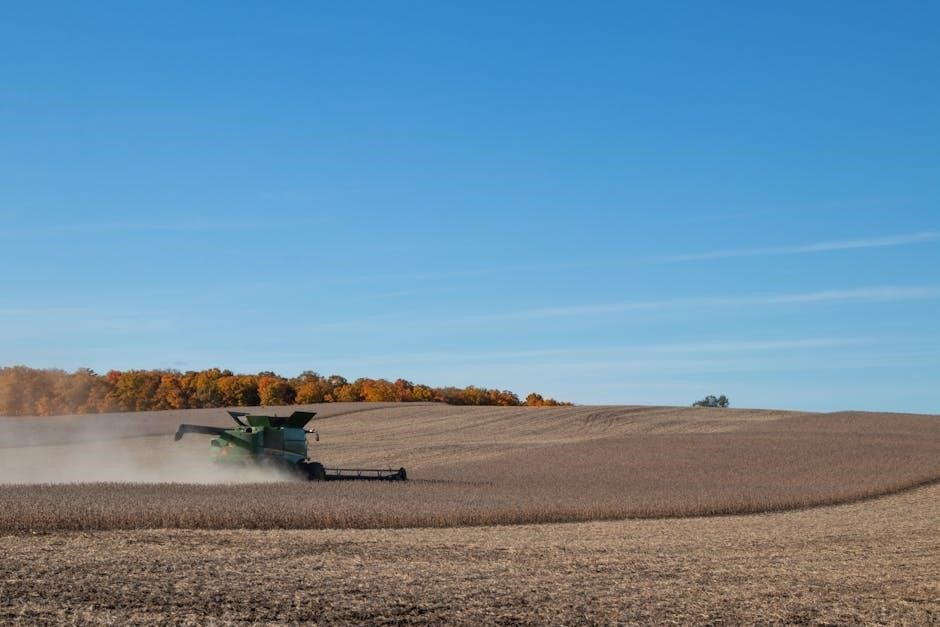
The Deere & Company Stock (DE) & Tractor Market Trends
Deere & Company’s (DE) stock performance often mirrors agricultural trends, impacting tractor values. Market conditions and sales figures influence investment confidence.
Stock Performance as an Indicator
Analyzing Deere & Company (DE) stock trends provides valuable insight into the overall health of the agricultural equipment market, directly influencing John Deere tractor values. Positive stock performance frequently correlates with increased demand for agricultural machinery, potentially driving up both new and used tractor prices. Conversely, a decline in stock value might signal economic headwinds or decreased farmer confidence, potentially leading to price softening.
Investors closely monitor Deere’s financial reports and future outlook, as these factors reflect the company’s ability to innovate and meet evolving agricultural needs. A strong financial position allows Deere to invest in research and development, enhancing tractor technology and features, which subsequently impacts resale values. Tracking Yahoo Finance for real-time data and historical trends is crucial for understanding these connections.
Overall Agricultural Equipment Market Conditions
Broader economic factors significantly impact John Deere tractor values. Commodity prices, farm income levels, and interest rates all play a crucial role in shaping demand. When crop prices are high and farm incomes are robust, farmers are more likely to invest in new or upgraded equipment, boosting tractor values. Conversely, economic downturns or low commodity prices can suppress demand and lead to price declines.
Supply chain disruptions, geopolitical events, and government policies also influence the market. Recent sales declines reported by Deere highlight the sensitivity to these external pressures. Monitoring overall agricultural trends, including planting intentions and harvest forecasts, provides a comprehensive view of the market’s trajectory and potential impact on tractor valuations.

Tips for Buying a Used John Deere Tractor
Prioritize a thorough pre-purchase inspection, checking for wear, damage, and maintenance records. Negotiate based on condition and market values to secure a fair price.
Pre-Purchase Inspection Checklist
A comprehensive inspection is crucial before buying a used John Deere tractor. Begin with the engine, checking for unusual noises, leaks, and smoke. Inspect fluid levels – oil, coolant, and hydraulic fluid – for proper consistency and volume. Examine the tires for wear and tear, ensuring even tread depth. Thoroughly test all hydraulic functions, including the loader and three-point hitch.
Don’t overlook the transmission; check for smooth shifting and any signs of slipping. Inspect the frame for cracks or welds, indicating prior damage. Verify the functionality of all lights, gauges, and electrical components. Finally, review maintenance records to understand the tractor’s service history and potential future needs. A professional mechanic’s inspection is highly recommended for peace of mind.
Negotiating the Price
Effective negotiation hinges on research and justification. Utilize data from Machinery Pete, AuctionTime, and TractorHouse to establish a fair market value for the specific model and condition. Highlight any identified issues during the pre-purchase inspection – repairs needed translate to price reductions. Be prepared to walk away if the seller is unwilling to compromise.
Consider the overall value proposition, factoring in hours, age, and location. Don’t be afraid to make a reasonable offer, starting lower than your target price. Emphasize your cash offer or financing readiness. A polite yet firm approach, backed by solid data, increases your chances of securing a favorable deal on your John Deere tractor.
Long-Term Ownership Costs
Beyond the initial purchase, budget for ongoing expenses like fuel, insurance, and routine maintenance. These costs significantly impact the total cost of tractor ownership.
Fuel Consumption
Estimating fuel costs is crucial for long-term budgeting. John Deere tractor fuel consumption varies dramatically based on model, engine size, and operational demands. Smaller, compact utility tractors like the 3045B will naturally consume less fuel than larger row crop or 4WD models such as the 6R 6130R or 8420.
Factors influencing fuel usage include the type of work being performed – heavy tillage demands significantly more fuel than light mowing. Consider the tractor’s age and engine efficiency; older models may be less fuel-efficient. Regularly maintained engines operate more optimally, reducing fuel waste. Monitoring fuel consumption patterns allows for proactive cost management and helps in accurately forecasting operational expenses throughout the tractor’s lifespan.
Insurance
Securing adequate insurance is a vital, often overlooked, component of John Deere tractor ownership. Premiums are influenced by several factors, including the tractor’s value, age, usage (farming vs. hobby), and your location. Comprehensive coverage typically includes liability, collision, and comprehensive protection against theft or damage from natural disasters.
Consider specialized farm insurance policies designed for agricultural equipment, offering broader coverage than standard auto policies. Obtain quotes from multiple insurers to compare rates and coverage options. Higher horsepower tractors and those used commercially generally incur higher insurance costs. Regularly review your policy to ensure it aligns with the tractor’s current value and your operational needs.